
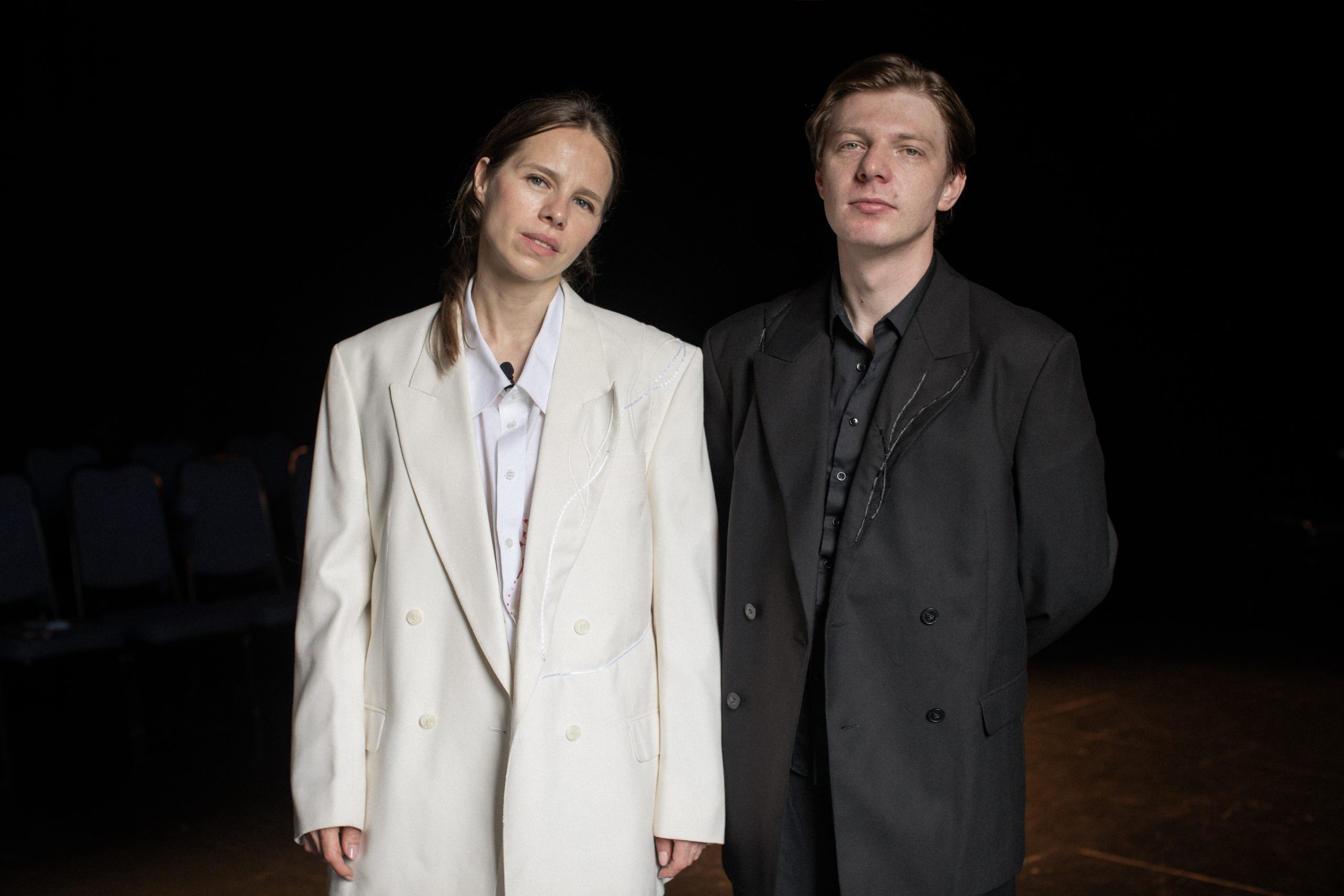
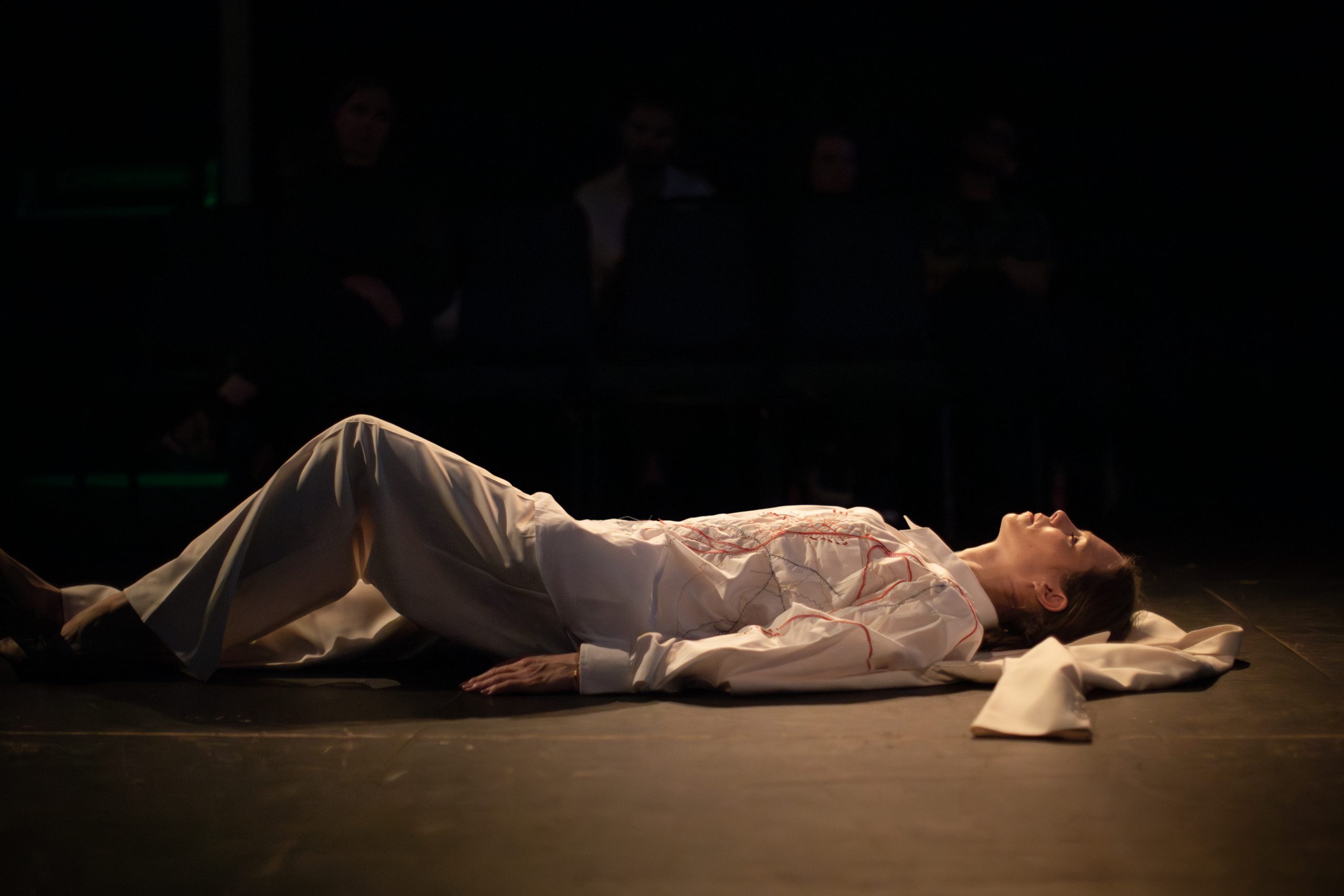
Ivanka Polchenko & Yanina Hope have been working together for a while and created this piece collectively, yet it felt there were still important things they never discussed — personal questions, motivations behind certain choices, and how they feel about the work now. Their exchange gives a clearer insight into The Sound of Absence — and the story behind the project.
Inspirations and Origins
Ivanka Polchenko:
Let’s start with an easy question. What were your inspirations? When you first had the idea of creating this project, did you look to other examples of autofiction, autobiography, or performances on the same theme? Or is it something completely original?
Yanina Hope:
It didn’t come out of nowhere, but it wasn’t directly inspired by one single source either. I tend to read a lot, and when my father passed away, reading became a form of comfort. During that period, I gravitated toward books dealing with grief and personal reflection. The first book I read was My Father and Myself by J.R. Ackerley, a classic English autobiography about a father–son relationship. That opened something for me. I then read E.A. Poe, Han
Kang’s The White Book and We Do Not Part and many books on grief, including Joan Didion’s The Year of Magical Thinking, which I found deeply comforting in how she documented her emotional process day by day. Around the same time, I reread The Bell Jar by Sylvia Plath, which stayed with me for a long time. I also immersed myself in solo theatre works — reading everything from Fleabag onwards, especially successful solo performances in the UK. I revisited Grief Is the Thing with Feathers, which I had seen years earlier with Cillian Murphy, and I realised that I hadn’t been ready for it at the time. I think I would experience it very differently now. I also saw a new play The Other Place after Antigone by Alexander Zeldin at the National Theatre, which reworked a Greek tragedy into a contemporary father–daughter story. All of this slowly accumulated, and one day I simply started writing. The first draft came quite quickly. The development process afterwards took much longer than the initial writing.
Distance, Pain, and Universality
Ivanka: I’m both surprised and pleased that you mentioned The Bell Jar. I am a great admirer of this book, in particular of how Sylvia Plath manages to tell this tragic story with dryness, even irony, resulting from the distance she keeps from her subject.
Yanina: Was this approach — transforming pain through distanciation — something that influenced your work as director on The Sound of Absence?
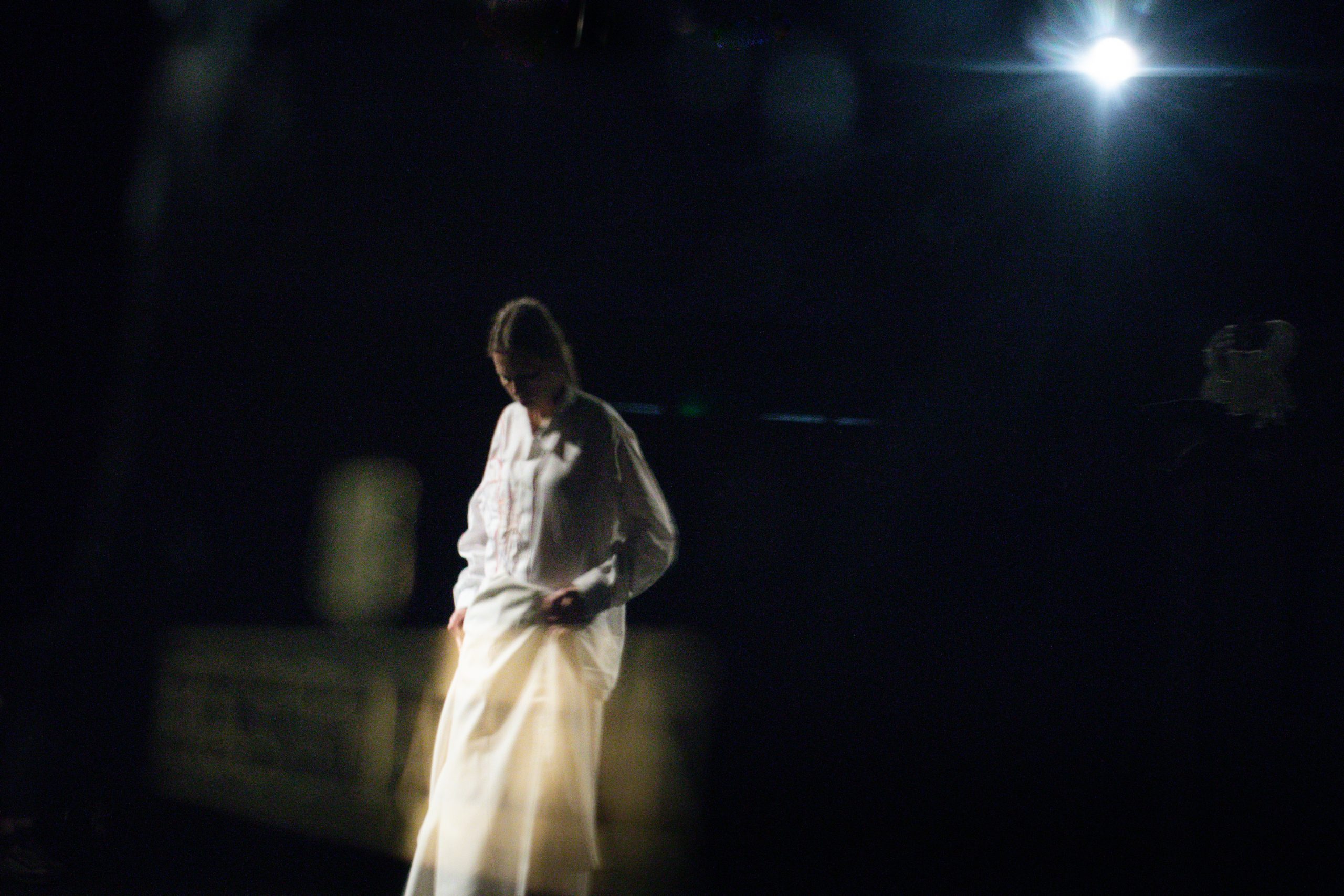
Ivanka: I never consciously thought of The Bell Jar while working on the piece, but I can see now that the idea of distanciation totally resonates with our story. What interests me most in theatre — and in art in general — is how distancing yourself from a subject can actually bring a deeper insight. With this project, my challenge was to tell a very personal story in a way that it could belong to everyone. I wanted to avoid plunging directly into emotional suffering. Instead, we worked on creating the distance — telling the story through another figure, that of the father. The character never speaks directly about herself; she reveals herself through the other. That distance allows the audience to project their own experiences. It becomes easier to say, “I recognise myself in this”, because the story is not self-pitying or self-deprecating. It’s relational, and that makes it more universal. How do you feel about this balance of personal versus confessional in the play?
Yanina: Yes, I was aware of the risk and didn’t want the piece to become self-indulgent or emotionally overwhelming. The story is about me, but it’s told through my father’s character — everything passes through him. It made the story feel safer, and paradoxically more open. I think it allows the audience to enter the work with their own experiences rather than watching someone else’s grief.
Music and Dramaturgy
Yanina: The music plays a crucial role in the piece. How do you see the dramaturgical relationship between the solo performer and the live musician?
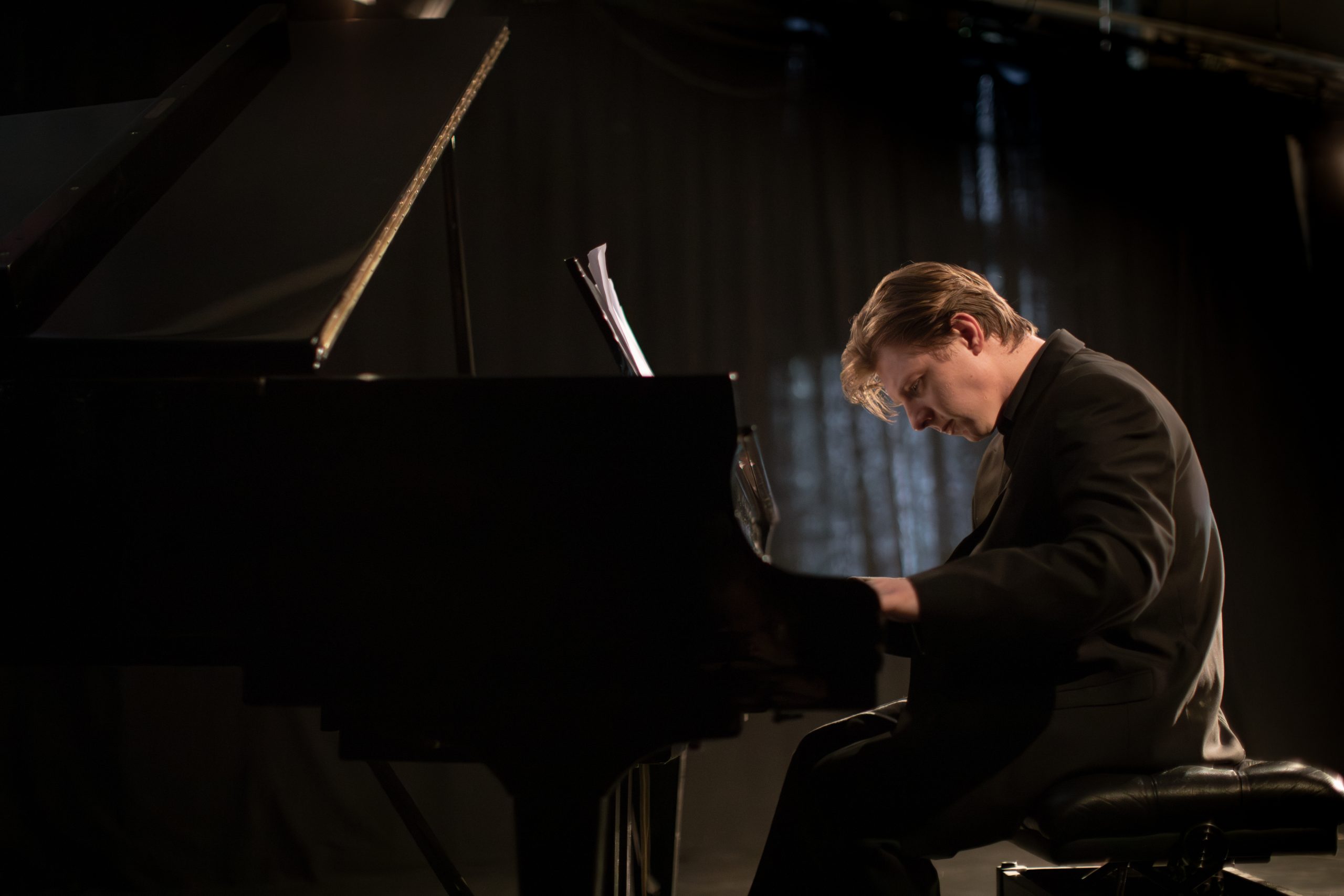
Ivanka: Music is a powerful non-verbal language. Often, when I start thinking about a project, I already associate it with certain melodies — emotional leitmotifs that I can’t yet express in words. Working with Vladyslav’s music was initially frightening because I didn’t know what it would sound like. But his minimalistic style created space rather than overload. I saw it as two parallel musical lines: one coming from the text and the actor’s voice, and the other from the music. Our challenge was maintaining the balance — ensuring neither overpowered the other. We wanted to avoid illustration, when music simply underlines emotion in an obvious way. Instead, music should carry emotion without explaining it. It creates space for silence, ambiguity, and interpretation.
Yanina: Looking back, it was a deeply collaborative project. I can see now how trust was fundamental in creating the show. We didn’t know each other well before starting, yet I felt I could trust you with an extremely personal story. That sensitivity made all the difference. The same applies to the music. This wasn’t a project where one element dominated. Text, music, and direction all carry equal weight. That balance only works when everyone trusts each other deeply.
Reality, Fiction, and Exposure
Ivanka: The piece is heavily based on your personal story. How did you navigate the line between reality and fiction?
Yanina: Initially, the writing was a form of self-discovery. After my father died, I realised I had always seen myself through his eyes. Writing helped me ask: who am I without that gaze? As the work evolved, it became less about me and more about him — about understanding him as a man, not just as my father. Over time, the piece became a story of a relationship rather than an autobiography. Of course, the events are dramatised. It’s not a pure documentary. But the more we worked on it, the more archetypal it became — almost like a Greek tragedy. The less personal it felt, the more universal it became.
And what about you? Did directing this piece make you reflect on your own experiences?
Ivanka: Absolutely. I thought a lot about my own father, who passed away in 2018. What resonated deeply was the idea of understanding and acceptance, and how that allows love to exist without regret. Another theme that touched me was memory — how someone who has passed away never truly leaves you. They live inside you constantly, in joy and in pain. That permanence is both a blessing and a burden.
Gender Archetypes, Power and Autofiction in Contemporary Theatre
Ivanka: The play centres on a strong male figure, told through a female perspective. Were you aware of how this interacts with contemporary discussions around gender and power?
Yanina: Yes, very much so. My father’s death allowed me to redefine myself as a woman. Understanding him helped me understand my own strength. I grew up in a male-dominated environment, and this piece reflects the complexity of that. It doesn’t excuse harm, but it refuses simplification. Strength, for me, came from processing the past holistically — not from blame, but from clarity.
Talking about trends, where do you see this work fitting within today’s theatre landscape?
Ivanka: Autofiction is everywhere right now, often with the risk of drifting into self-indulgence. What I think sets this piece apart is its restraint and cohesion — largely thanks to the music. The show feels seamless (I hope). You don’t see the mechanics; you feel carried. The audience isn’t told what to feel — they’re invited to experience it.
Yanina: I agree, what makes this piece different is its restraint. It doesn’t ask for empathy — it creates space for it. And that openness feels essential today.
The Sound of Absence, written and performed by Yanina Hope and Directed by Ivanka Polchenko plays at The Omnibus Theatre from 24 – 28 FEB